
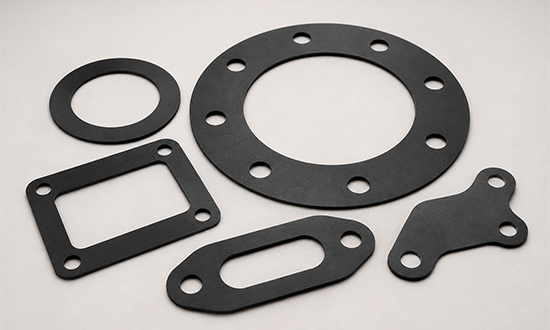
Butyl gaskets provide a strong barrier to gases and moisture vapour while also offering good resistance to ageing, ozone and weathering. Butyl rubber, designated isobutylene-isoprene rubber (IIR), has a densely packed polymer structure that restricts the diffusion of gas molecules through the gasket body.
This makes it particularly suitable for compatible static duties where gradual gas transmission could affect pressure stability, vacuum integrity or the composition of a controlled atmosphere. Typical applications include vacuum equipment, pressure-retention devices, gas-filled electrical equipment, sealed instruments and controlled-atmosphere enclosures.
RELATED RUBBER PRODUCTS: Rubber Gaskets Overview | EPDM Rubber Gaskets | Neoprene Gaskets | Silicone Gaskets | Hypalon Gaskets | SBR Gaskets
A gas-tight joint must control both leakage at the flange interface and permeation through the gasket material. Increasing gasket stress may reduce interfacial leakage, but it does not fundamentally change the permeability of the elastomer.
Our guide to low gas-permeability sealing explains this distinction, where butyl offers an advantage and the wider factors that influence material selection.
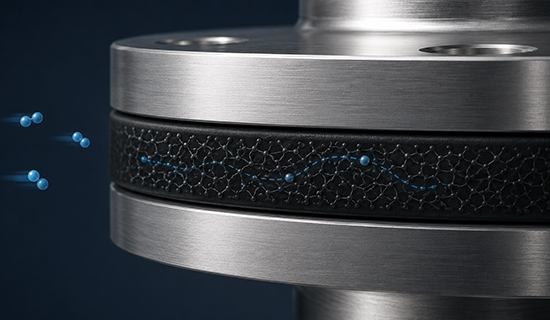
Butyl rubber, designated isobutylene-isoprene rubber (IIR), is a synthetic copolymer composed primarily of isobutylene with a small proportion of isoprene. Its tightly packed molecular structure restricts the passage of gas and moisture vapour through the material.
This low permeability distinguishes butyl from many general-purpose rubbers. It can help limit gradual pressure loss, vacuum degradation and atmospheric exchange through the gasket body.
Key properties include:
Butyl should be selected as part of the complete sealing system. Material grade, gasket thickness and geometry must be considered alongside pressure differential, operating temperature, chemical exposure, flange condition and available gasket stress.
Butyl is generally unsuitable for mineral oils, petroleum fuels and many hydrocarbon solvents. Its relatively slow rebound also requires careful assessment in rapidly cycling or highly dynamic seals.
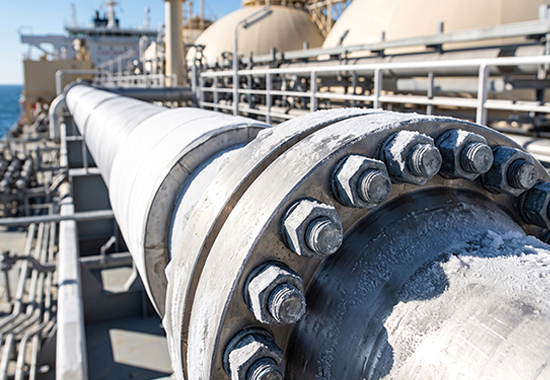
Butyl gaskets are principally used in static sealing applications where low gas or moisture-vapour permeability is essential. Typical uses include vacuum equipment, pressure-retention devices, gas-filled electrical equipment, sealed instruments and controlled-atmosphere enclosures. In these applications, butyl can help reduce gradual pressure loss, vacuum degradation and atmospheric ingress through the gasket body.
Butyl may also be considered for compatible outdoor installations, laboratory equipment and specialist closures where its resistance to ageing, ozone, weathering and water supports long-term service. Suitability depends on the complete operating environment, including temperature, pressure differential, flange condition and chemical exposure. Butyl is generally unsuitable for mineral oils, petroleum fuels and many hydrocarbon solvents.
Our highly experienced technicians can advise you on the best sheet materials and manufacturing processes for a wide range of gasket applications.